How to safely pay contractors in the UK
A practical payment safety guide for UK homeowners hiring builders, decorators, landscapers, and other contractors.
Slate
Slate guide
3 min read

The safest way to pay a contractor is to make payment follow agreed work, not anxiety. That means written terms, clear stages, evidence of progress, and a payment method that leaves a record.
This is not about assuming every contractor is risky. Good tradespeople need protection too. They buy materials, schedule labour, and lose money when customers delay or disappear. A fair payment structure protects both sides.
Start with a written quote
Citizens Advice recommends getting quotes in writing before you agree to home improvement work. A quote is different from an estimate because it fixes the price unless the scope changes and both sides agree: Before you get work done on your home.
Your quote should cover:
- the scope of work
- materials and who supplies them
- start dates and expected timelines
- payment dates or milestones
- what happens if extra work is needed
- what completion means
If payment terms are not written down, you are relying on memory when something goes wrong.
Avoid paying too far ahead
The biggest safety rule is simple: do not let your payments get too far ahead of completed work.
A deposit may be reasonable for materials or booking, but large upfront payments should be justified. Progress payments should map to visible stages, not calendar dates alone.
For example, "pay £3,000 on Friday" is weak. "Pay £3,000 once first-fix plumbing is complete and photographed" is clearer.
Use staged payments
A safer contractor payment structure often looks like:
- Small deposit or materials payment.
- Stage payment after preparation or strip-out.
- Stage payment after a defined build milestone.
- Stage payment after installation or second fix.
- Final payment after completion checks.
This is the logic behind milestone payments. The contractor can see the job is funded, while the homeowner avoids paying the whole budget before work is complete.
Keep a payment record
For most projects, bank transfer is better than cash because it creates a traceable record. Use invoice references and keep proof of payment.
Avoid paying into unrelated accounts. If the quote is from a company, ask why payment is going to a personal account. If bank details change, verify them before sending money.
Know your basic consumer rights
UK consumer law expects services to be carried out with reasonable care and skill. GOV.UK lists building work and rogue traders among consumer protection issues where people can seek advice: Consumer rights.
That does not remove the need for good payment terms. Rights are easier to use when your agreement, milestones, messages, and payment records are clear.
FAQ
What is the safest way to pay a builder?
Use a written payment schedule, pay by traceable method, and release money against completed stages rather than vague dates.
Should I pay contractors before work starts?
Sometimes a small deposit or materials payment is reasonable. The amount should be justified and documented before you pay.
Is cash a bad idea?
Cash leaves a weaker paper trail. If you pay cash, get a written receipt immediately, but for larger jobs a traceable payment method is usually safer.
Related guides
Keep reducing payment uncertainty
How milestone payments work
Milestone payments break a project into agreed stages so contractors know payment is available and homeowners only release money when work is done.
Why homeowners and builders both need protection
Payment protection is not just for homeowners. Good builders also need confidence that serious customers will pay for agreed work.
Is 50% upfront normal for builders?
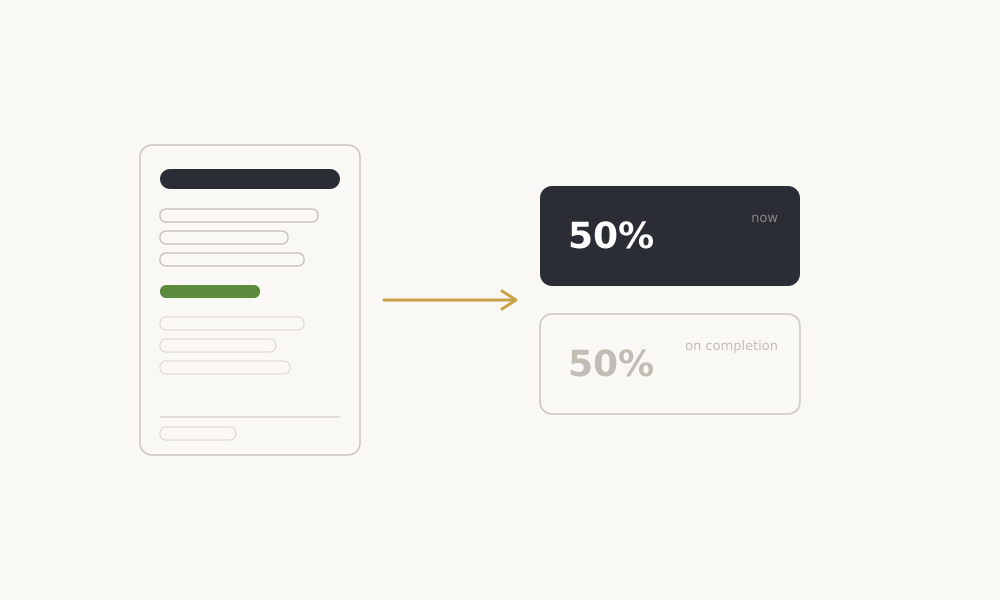
A 50% builder deposit can be a warning sign unless it is tied to real materials, dates, and written milestones. Here is how to judge the risk before paying.
Should you pay tradesmen by bank transfer?
Bank transfers are common for tradespeople, but they can be hard to reverse. Learn when they are sensible, when they are risky, and what checks to make first.